
The Biggest Misconception About Sensory Processing

The sensory systems are deeply interconnected.
Each sense influences the others.
Emotions influence sensory experiences.
Experiences ripple across the whole nervous system.
When we look at just one sense in isolation, we often miss what’s really going on.
How to Lower Demands Around Writing

Lowering demand is not about giving up on handwriting or learning.
It is about changing how writing is introduced so it feels manageable rather than threatening.
For children with PDA, demand avoidance, anxiety, dyspraxia, or sensory processing differences, reducing the felt pressure can make writing more accessible over time.
Child Refuses to Write? Understanding PDA and Writing Resistance

Recently in my Helping Kids Write community, parents have been sharing what has helped their child with PDA, demand avoidance, or anxiety around handwriting. Being able to hear how they focus on safety, connection, and interests before expecting writing has been powerful.
“My Child Can’t Even Sit Still!”

I often think our society expects people to sit too much. In reality, it’s much better for us to be moving—getting up and down from the floor, staying active. Movement keeps circulation flowing, muscles strong, and our bodies from getting stuck.
Sensory Support Doesn’t Have to Be Hard

People often think sensory support means setting up picture-perfect activities, obstacle courses, or buying loads of sensory equipment to meet their child’s needs.
And I get why you might think that.
I used to believe that too, especially in my early OT days, nearly 27 years ago.
Sensory Support Isn’t About Fixing — It’s About Understanding
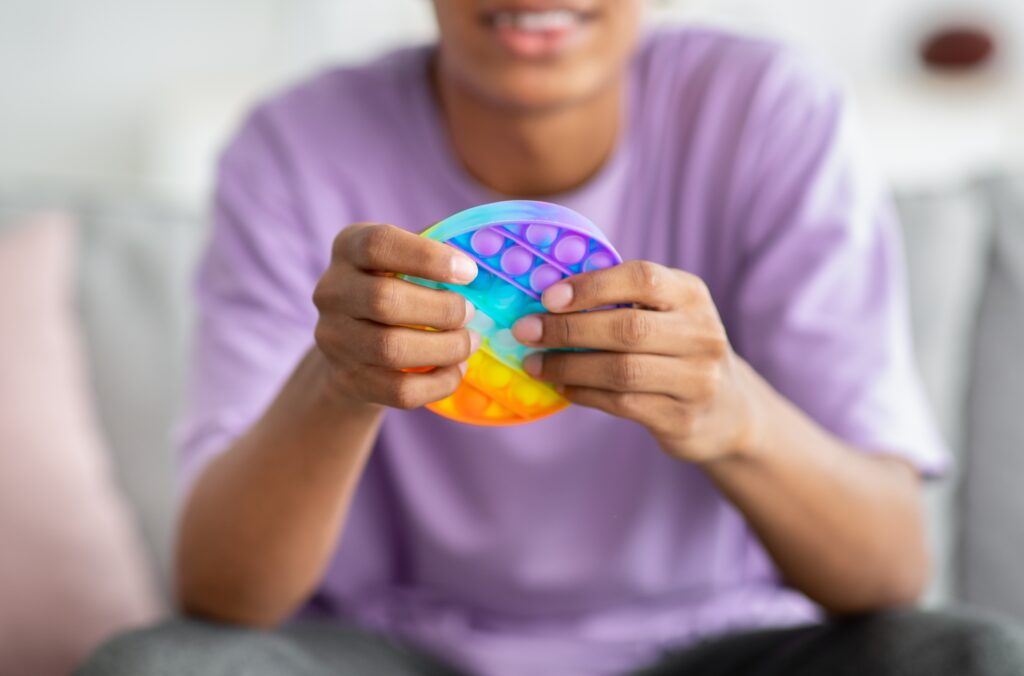
Understanding Children’s Sensory Needs We often hear words like sensory issues, sensory problems, sensory difficulties… but the truth is, your child’s brain knows exactly what it’s doing. Their nervous system is intact—working hard to protect them, ground them, and keep them safe. Of course, this doesn’t mean things aren’t challenging. It can be very hard […]
More or Less Sensory Input?

But remember: sensory processing is not static. Children can fluctuate between needing more and less, and many have what we call mixed responsiveness.
The ‘Calm Up to Calm Down’ Way

Most people think that calming down looks like sitting quietly, taking deep breaths, listening to soft music, or doing something still and gentle. And for some, that might work.
But for many neurodivergent people, kids and adults alike, that’s not what calming down feels like at all.
Why Your Child’s Writing Isn’t Improving (Even After All That Practice)

Writing isn’t just a cognitive skill.
It’s a complex coordination of multiple systems and it builds in a specific sequence.
At the base of this developmental pyramid is sensory processing. From there, each layer supports the next.
Join Me at the PDA Space Summit 2025: Exploring Equity for PDA’ers

As a brown, neurodivergent, single parent and Occupational Therapist, I see every day how much our systems ask kids (and families) to change themselves to fit in instead of adapting environments to effectively meet their needs. That’s why I’m so happy about the conversations this summit is bringing to the forefront.